
The Problem with Reductive "Think" Pieces on Disability, Written by Able-Bodied People with No Context or Personal Experience with the Topic
A roundup of responses to Kathleen Stock's infuriating article.


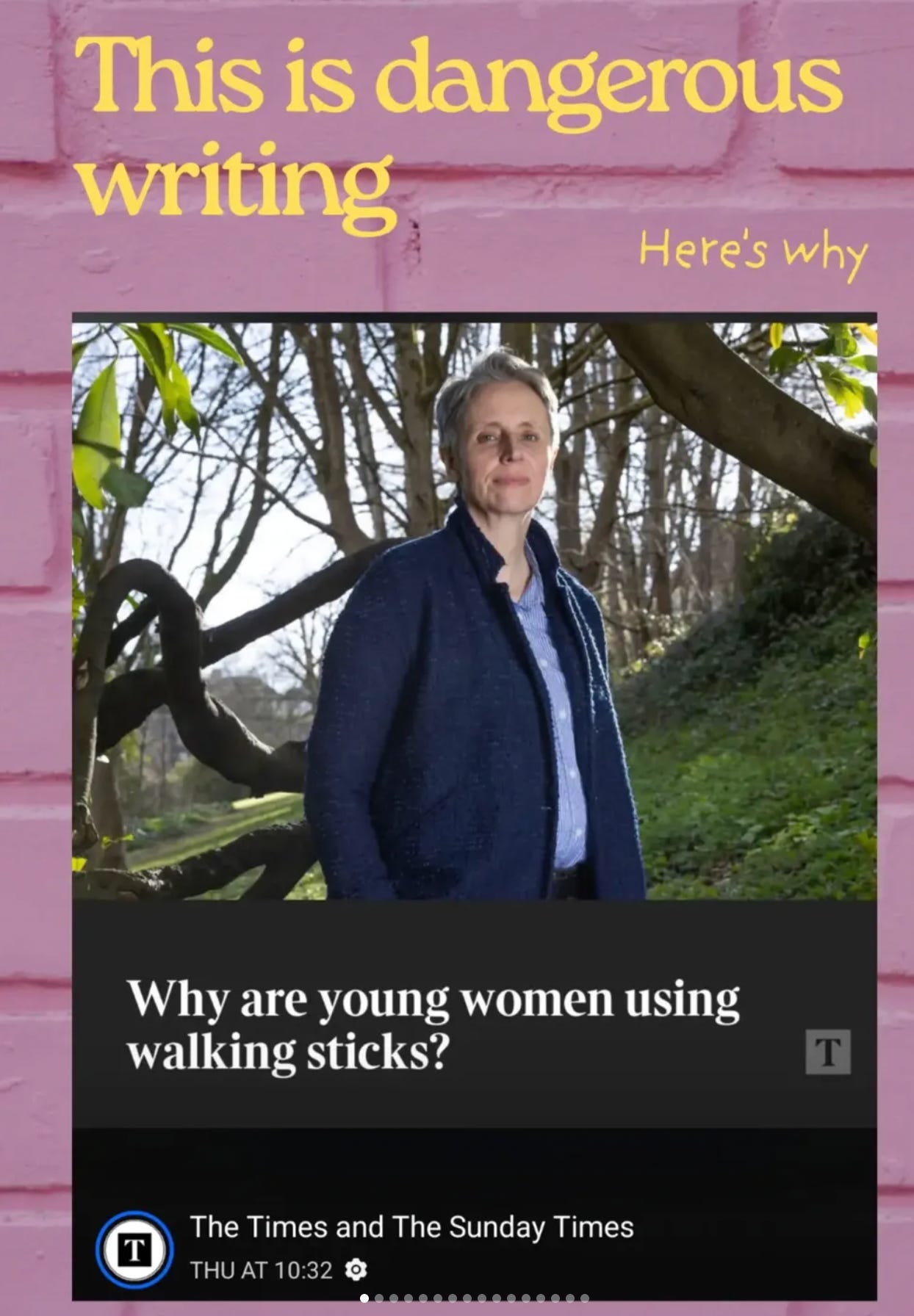
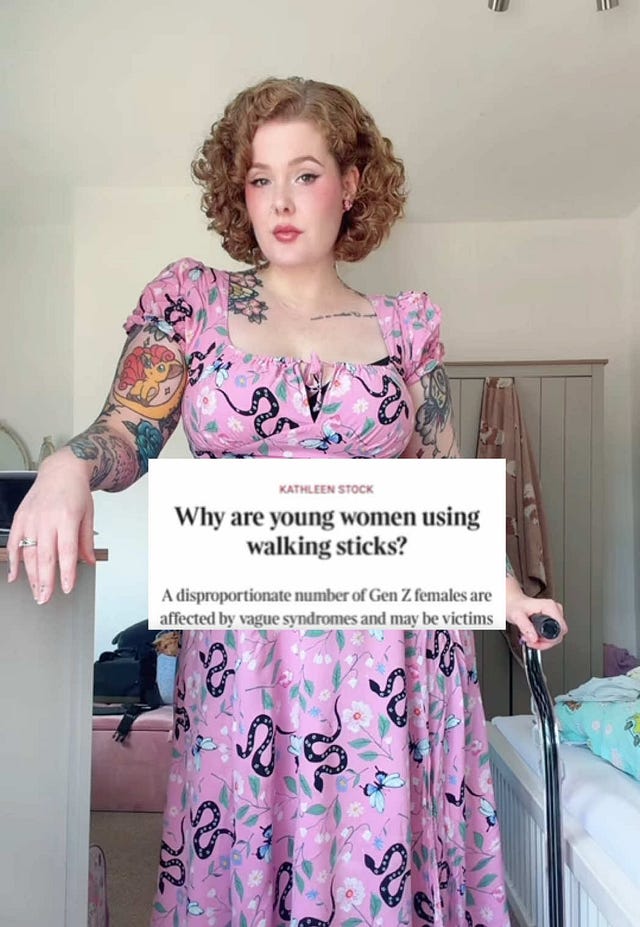
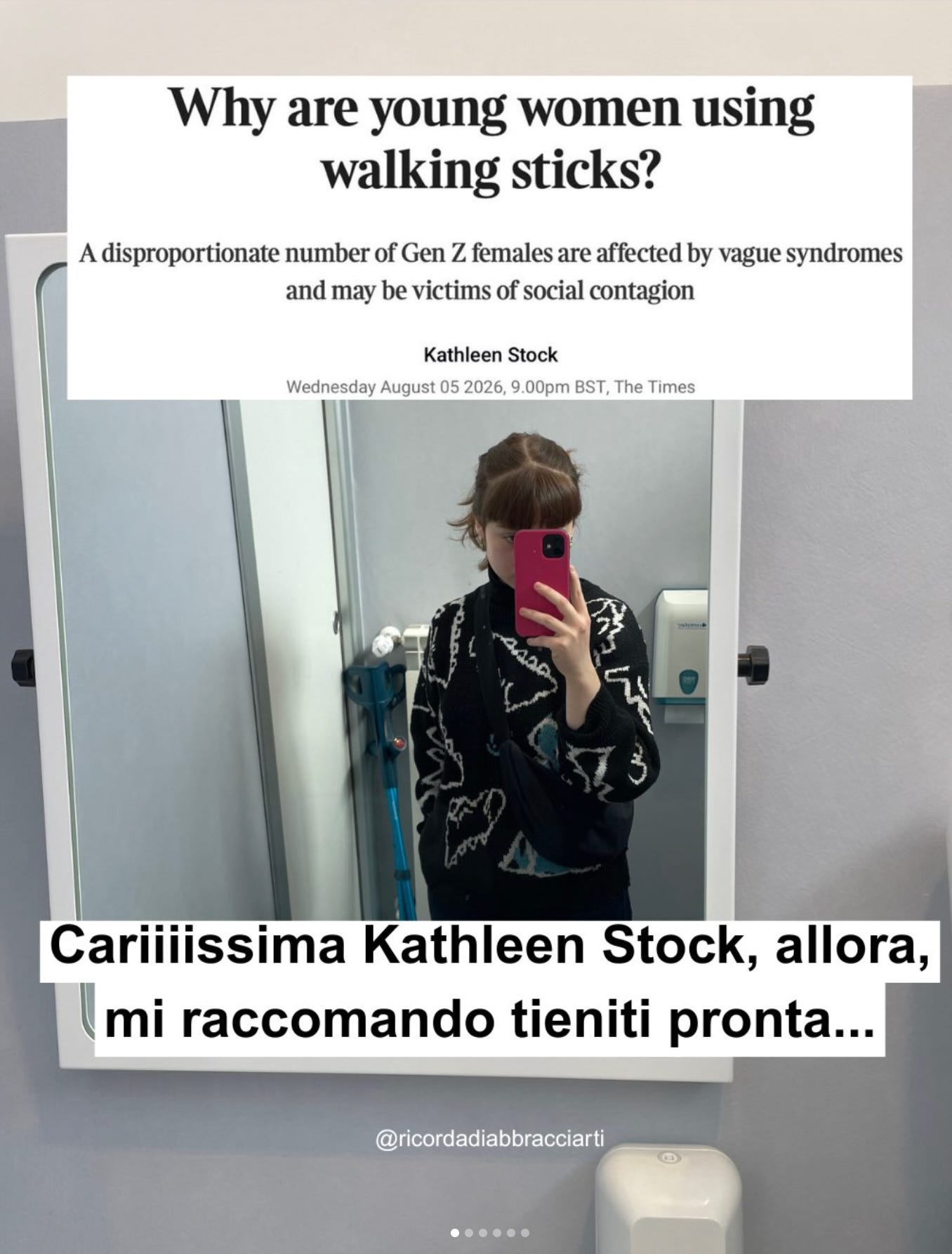
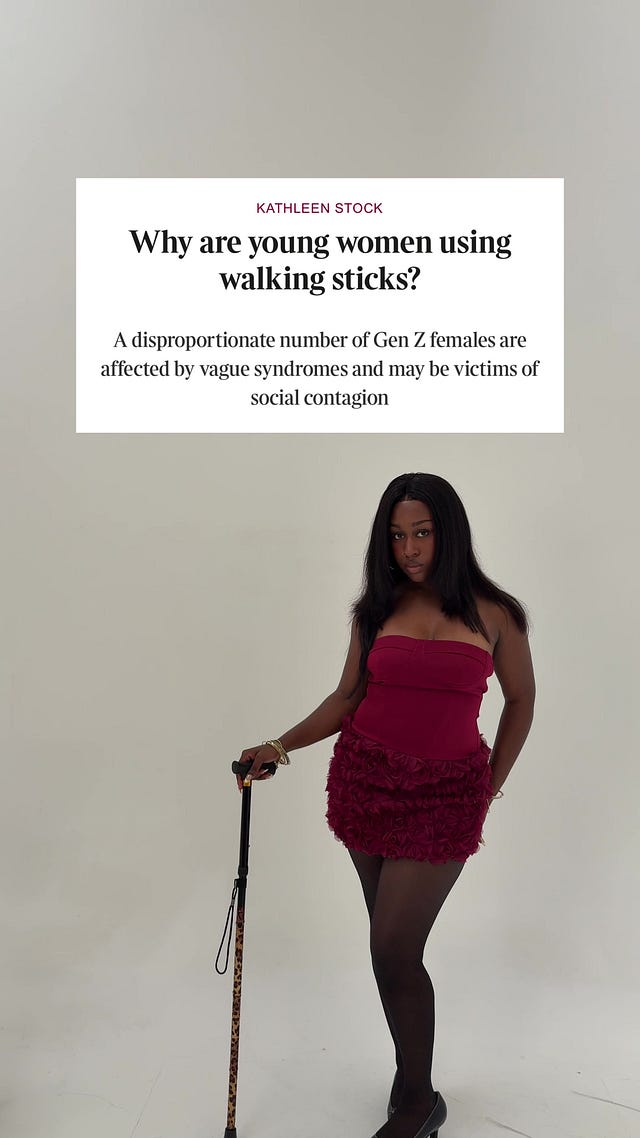
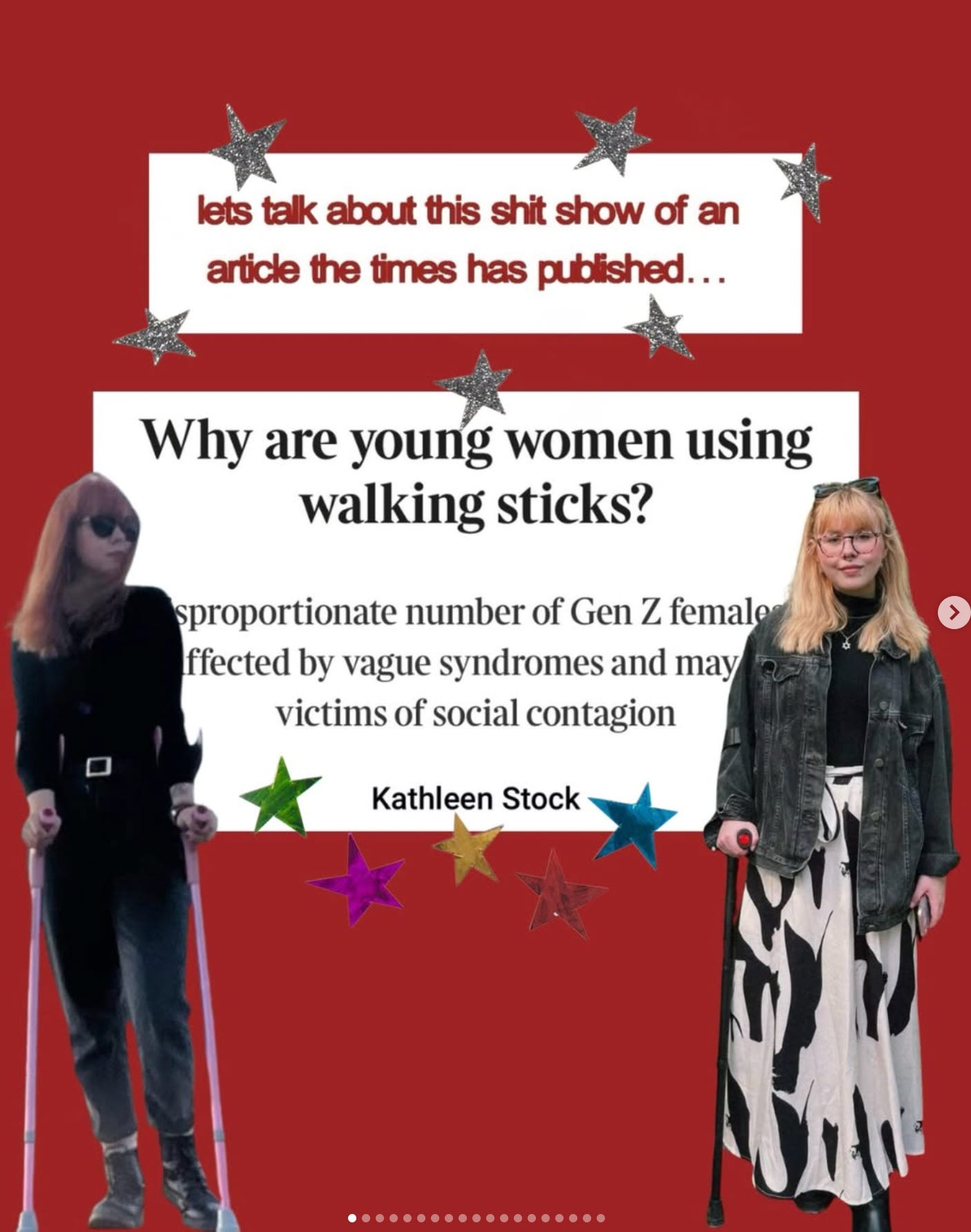
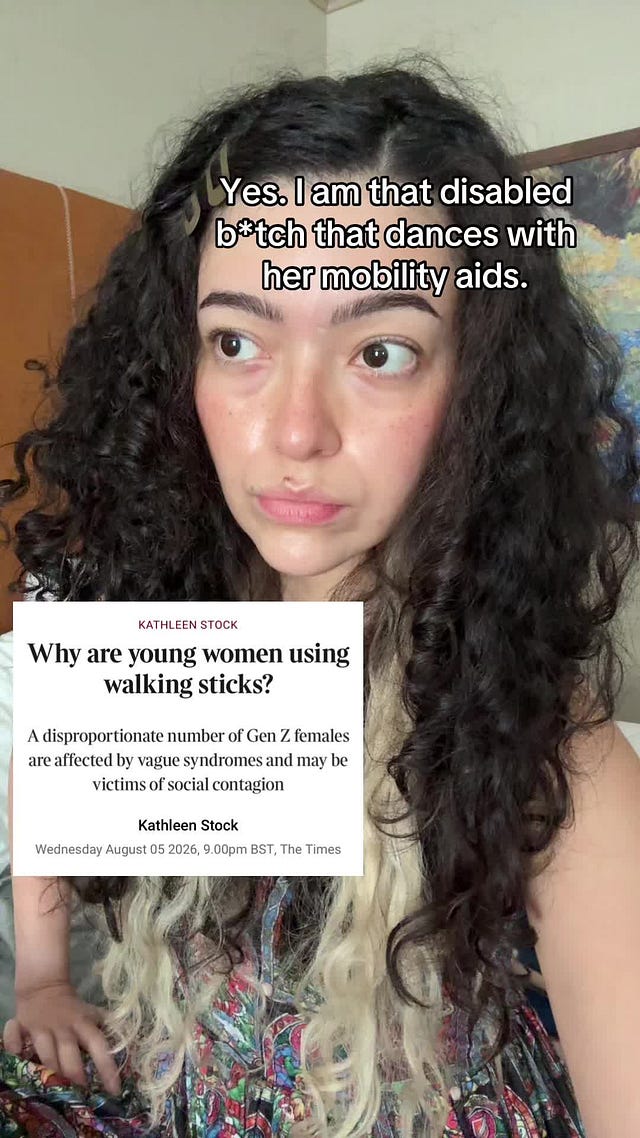
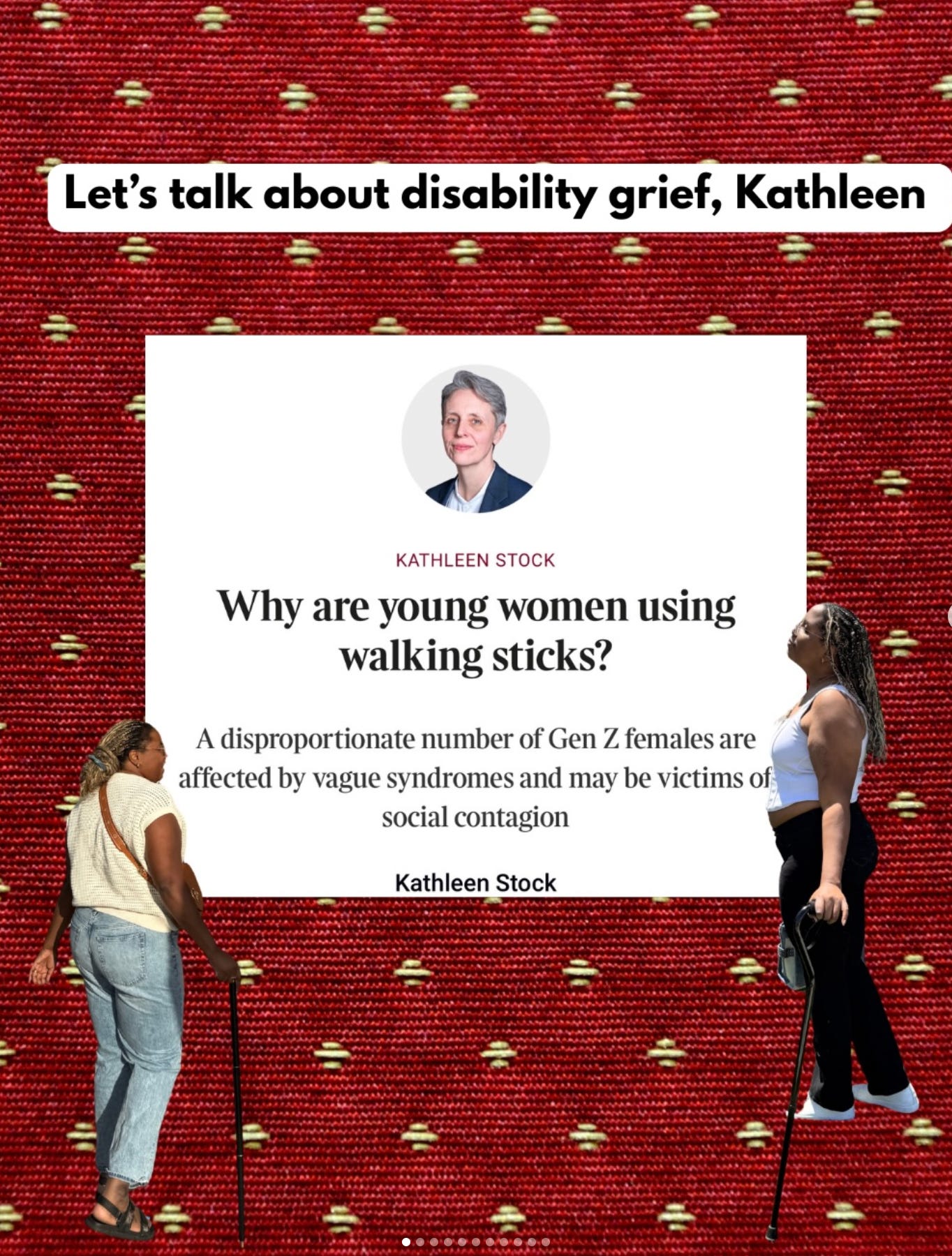
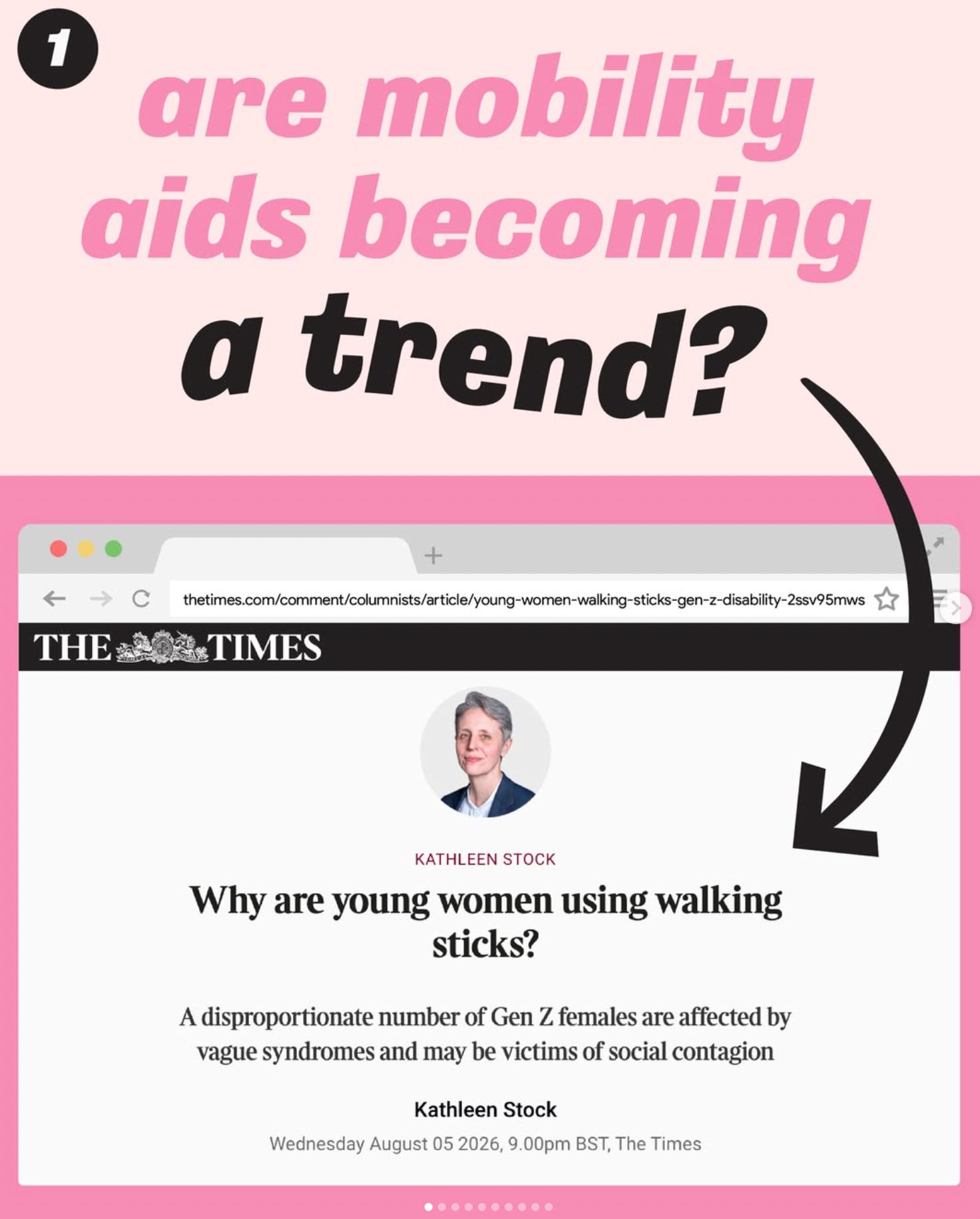
My blood is boiling just thinking about this article. You probably know the one: Kathleen Stock’s piece in The Times. I’m not going to dignify it with a link, and I suggest you find it on Archive so you’re not giving The Times more page views.
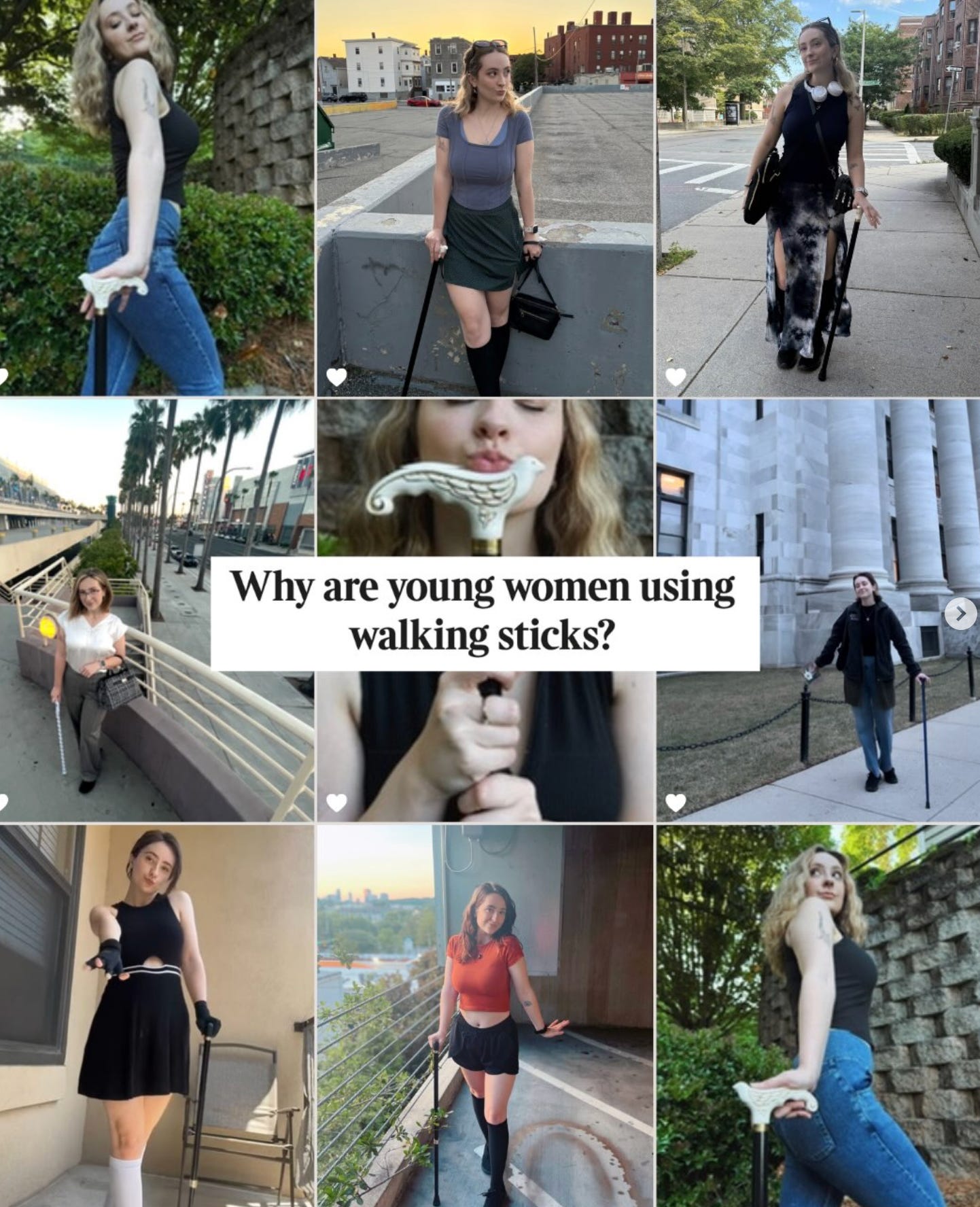
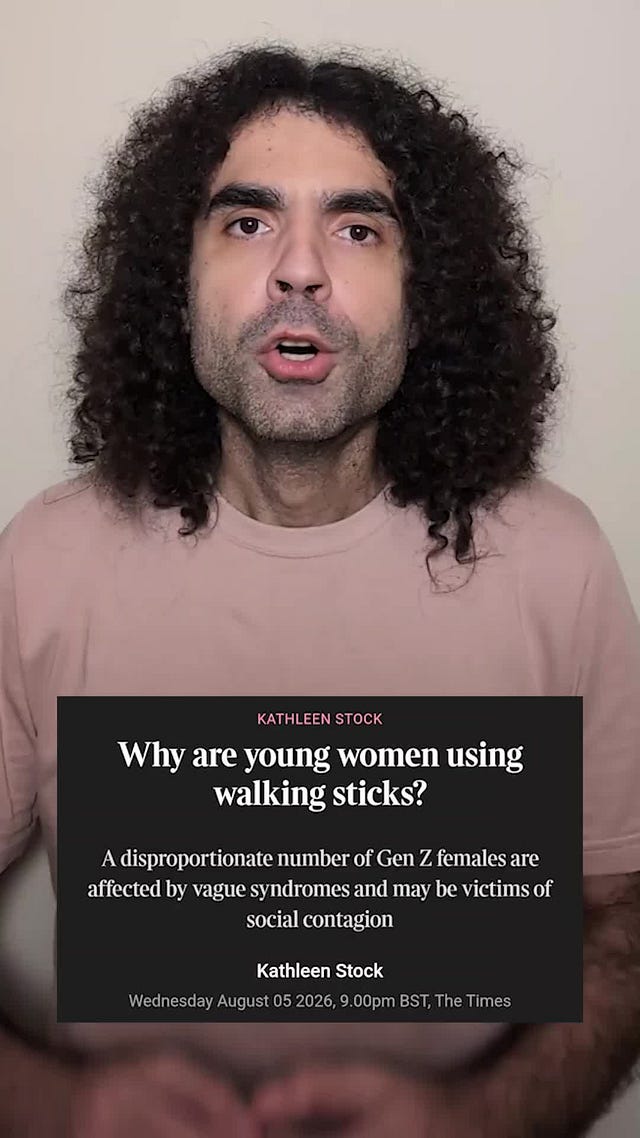
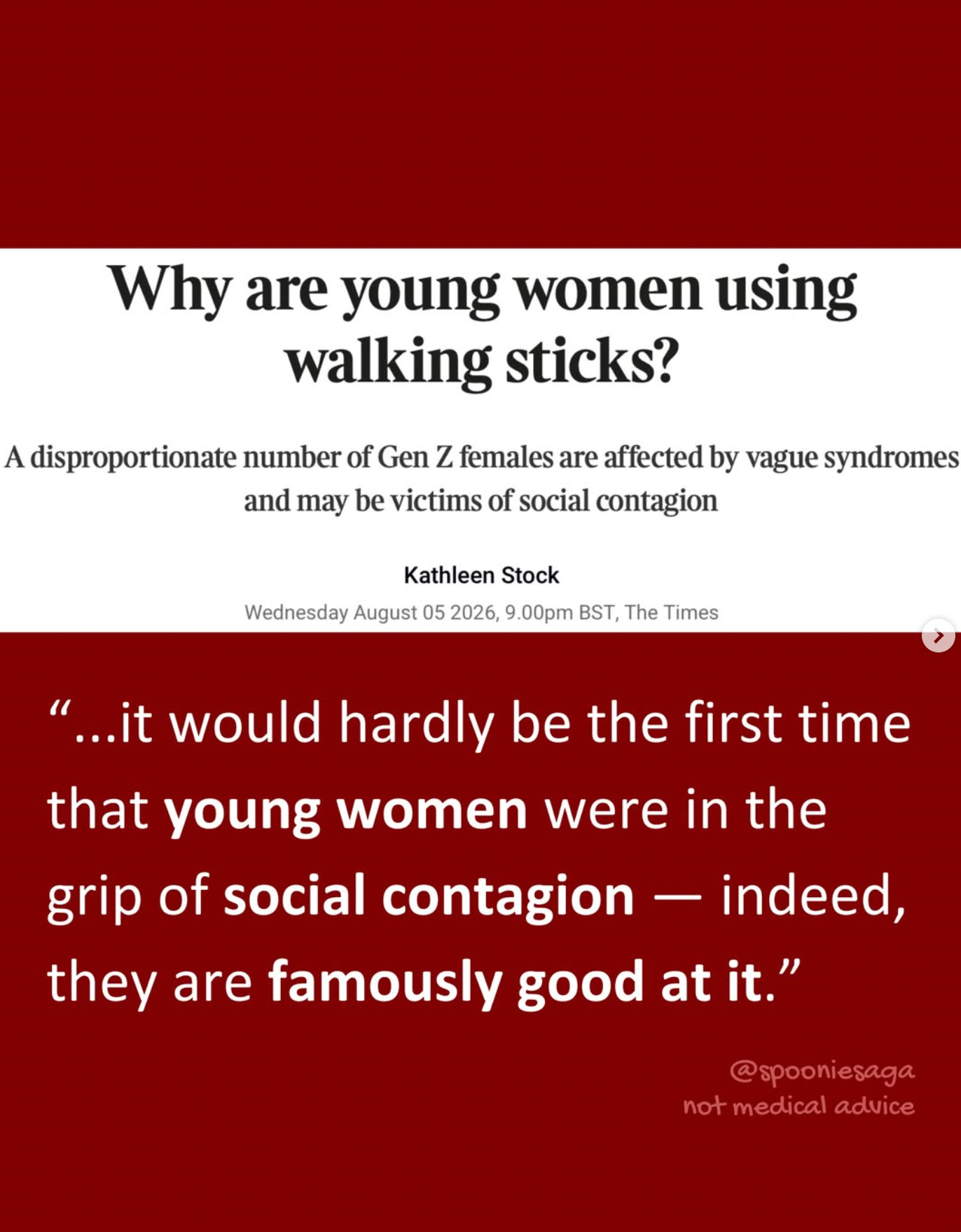
If you haven’t heard about it or read it yourself, Kathleen Stock (also a TERF, so this gives you everything you need to know about her character imo), asks the question “Why do Gen Z females, apparently unlike every generation before them, have strangely unstable bodies that intermittently require support?”
The article hits all the wrong notes, claiming that young women have all sorts of vague ailments with “medical sounding” names, with symptoms “we’re all familiar with” that can really be chalked up to teenage anxiety. The Times also inserts a link to another article just to add fire to the flames: “When my ADHD diagnosis was removed, it was a relief. ” Oh joy. Stock proposes that these illnesses, the ones that young women use mobility aids for, are part of a greater “trend” going on right now, and then she very bravely concludes her article by saying “We owe it to potentially able-bodied young people to challenge their tendencies to neuroticism and fear; to get them out into the world as functioning adults, wherever that is possible.” How kind and generous of her!!! (I’m being sarcastic in case you couldn’t read my tone.)
I (Alyssa) have a lot of thoughts on this, but to be honest, I’m not one of the women she’s talking about. I don’t have postural orthostatic tachycardia, joint hypermobility, fibromyalgia, [or] myalgic encephalomyelitis/chronic fatigue syndrome, though I do use mobility aids for my rheumatoid arthritis.
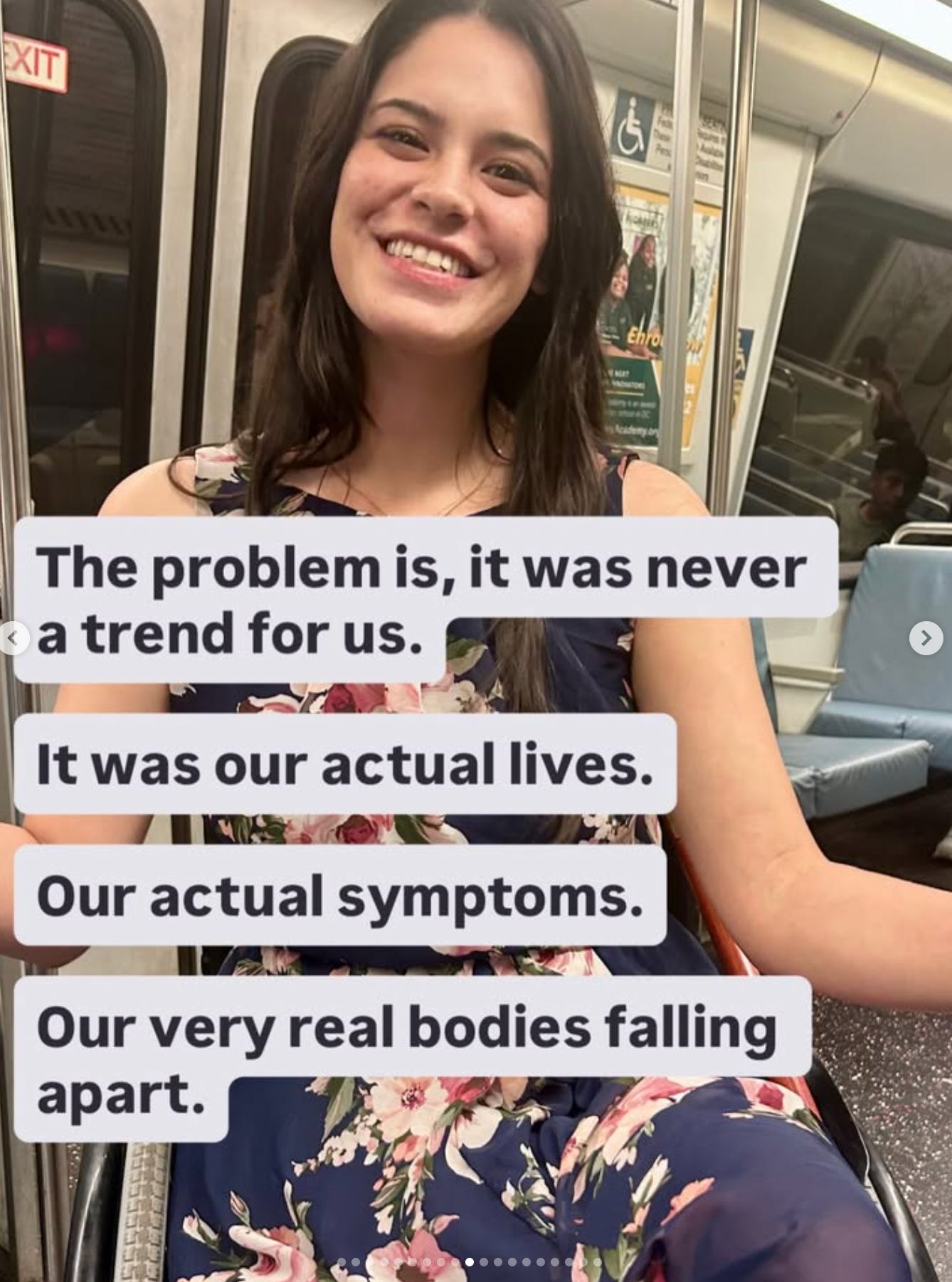
One of the hardest things to acknowledge in this article is that it’s just another piece of proof telling us that disabled people can never win. When we’re minding our own business, people observe us and make ill-informed remarks, like Stock is doing. When we try to make our voices heard, we’re too much. When we don’t use aids that make our illnesses visible, we have to completely adhere to able-bodied standards. When we use mobility aids or other devices that make our illnesses visible, we’re told we’re just hopping on a trend. Nowhere in the discourse is there ever any room for just accepting that we know our bodies and letting us live in the ways we can.
What’s even more infuriating is that Stock is completely missing the point, furthering stigma, and asking the WRONG QUESTIONS. Why is she blaming young women — women who, by the way, have 78% higher odds of contacting a primary-care doctor within six weeks of noticing symptoms than men do — for listening to their bodies and finding ways to live more easily, rather than question the systems behind why women might be experiencing the symptoms and receiving the diagnoses in much higher proportions than earlier generations?
Why isn’t Stock, a freaking journalist, exploring the correlation between POTS, hEDS, and Long Covid + COVID-19 exposure?? Like, yes, there are SO many reasons women today are experiencing symptoms other generations haven’t, as well as a huge reason why they’re not just suffering through symptoms and trying to appear “normal,” but finding the tools that work for them. HELLO WORLDWIDE PANDEMIC THAT ISN’T OVER. HELLO INTERNET THAT CONNECTS PEOPLE EXPERIENCING THE SAME SYMPTOMS ALL OVER THE WORLD.
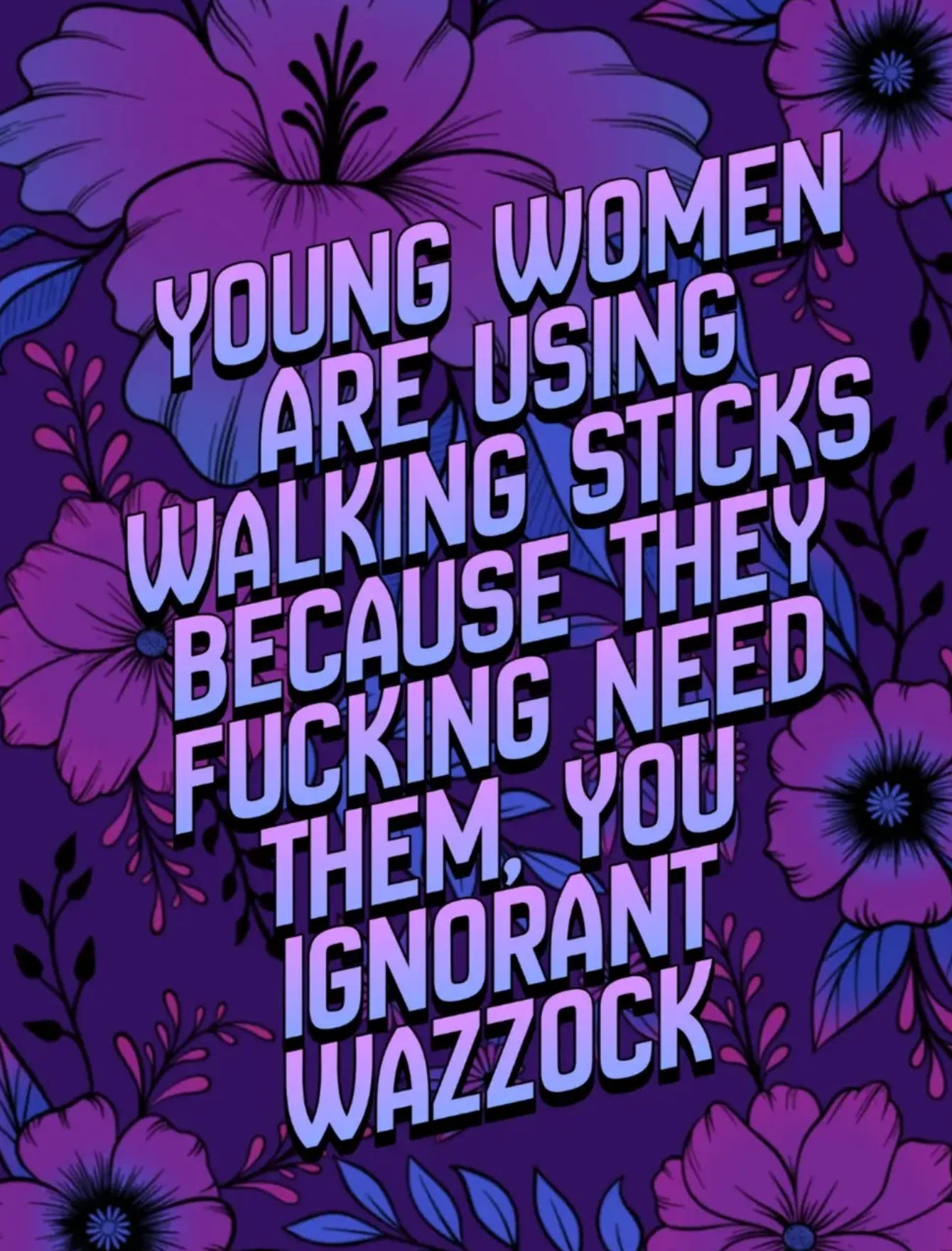
My god… people are not using mobility aids because they’re trendy!! What the actual fuck!
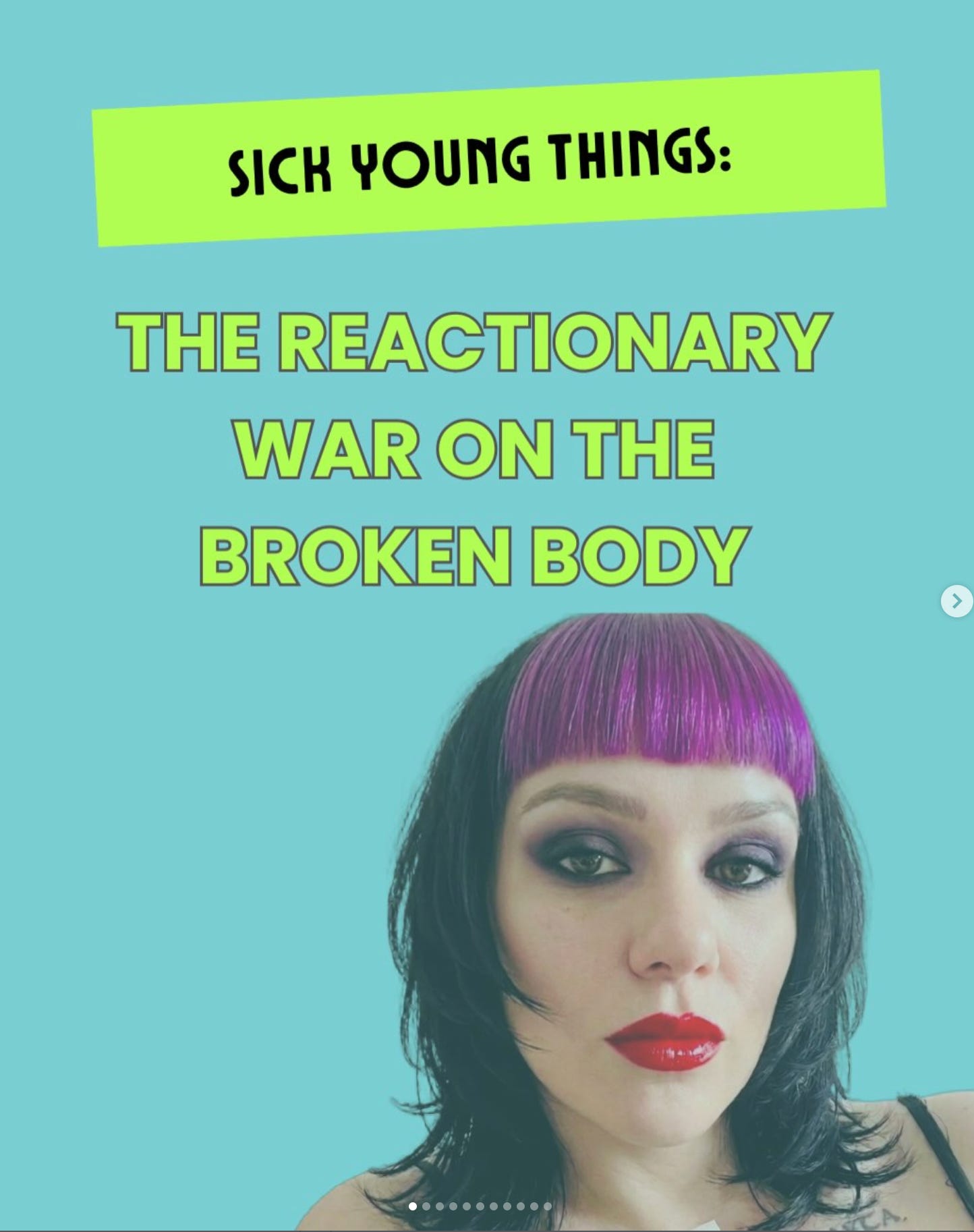
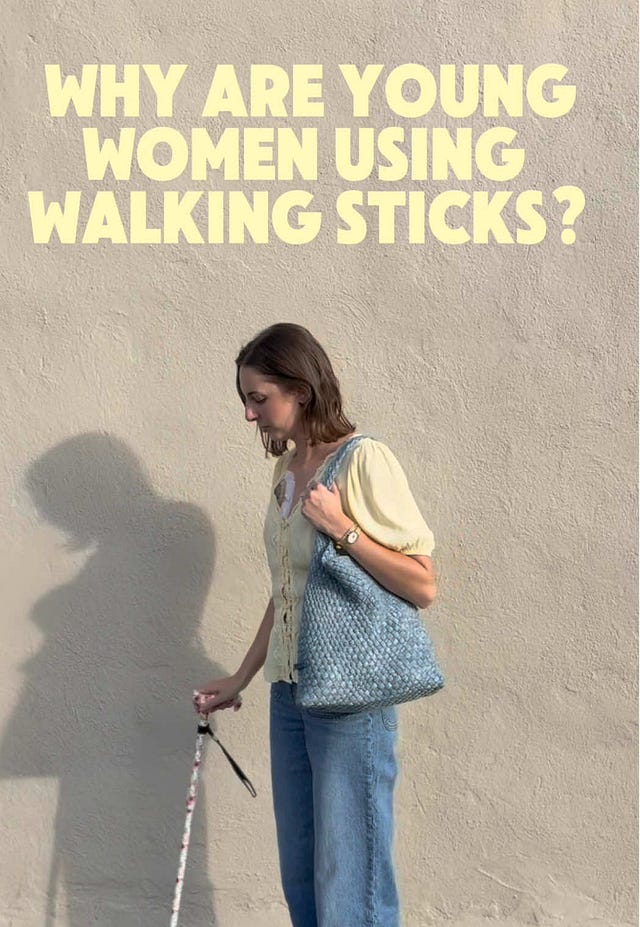
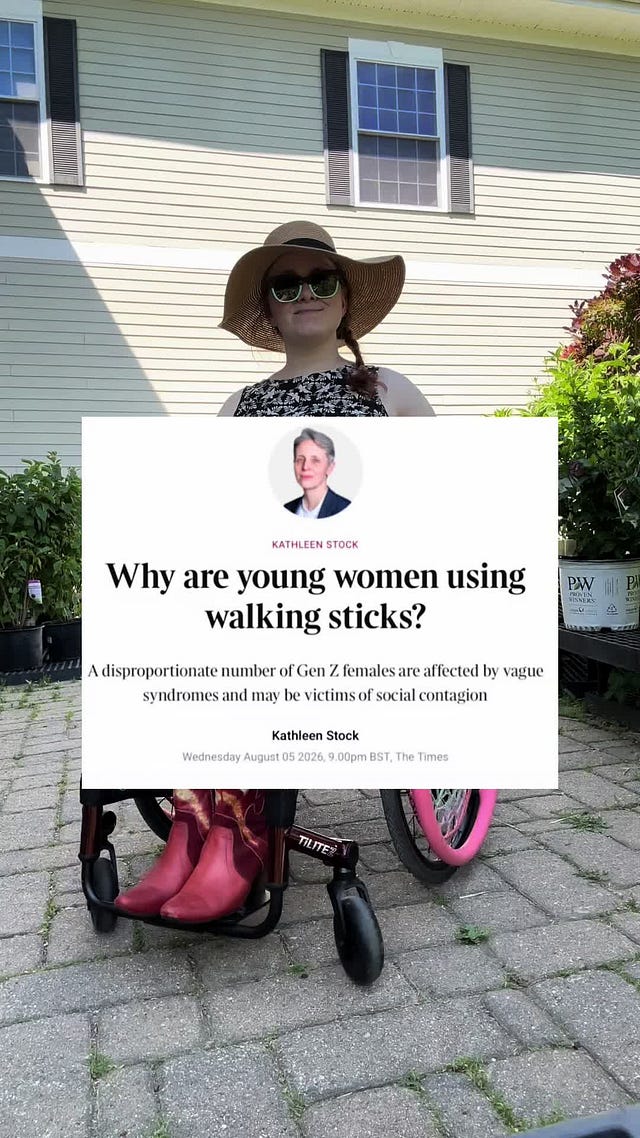
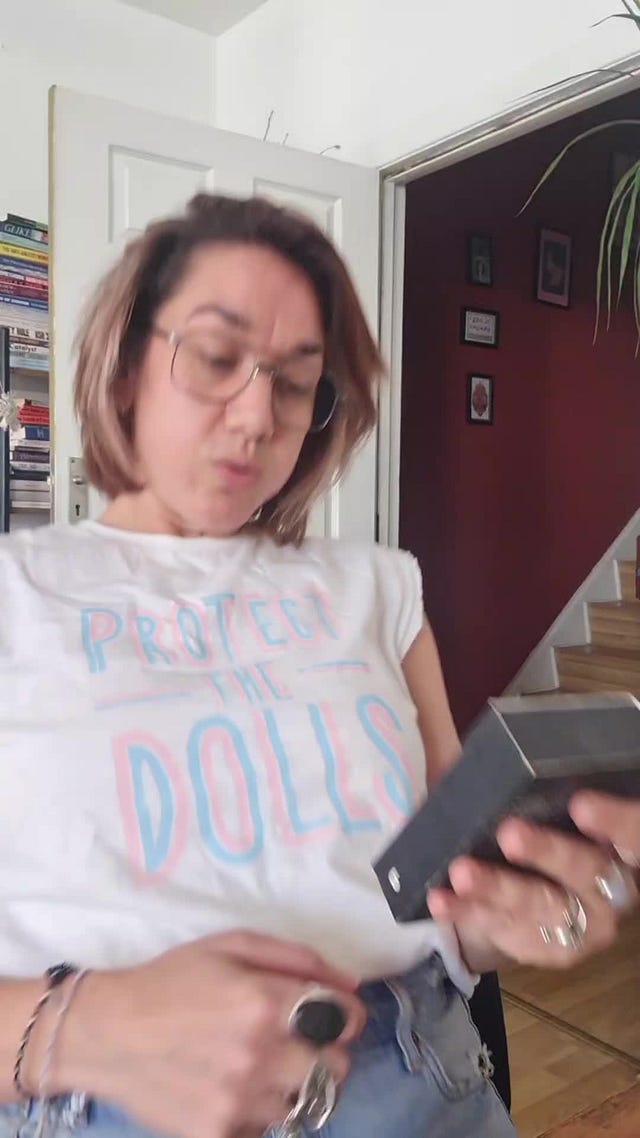
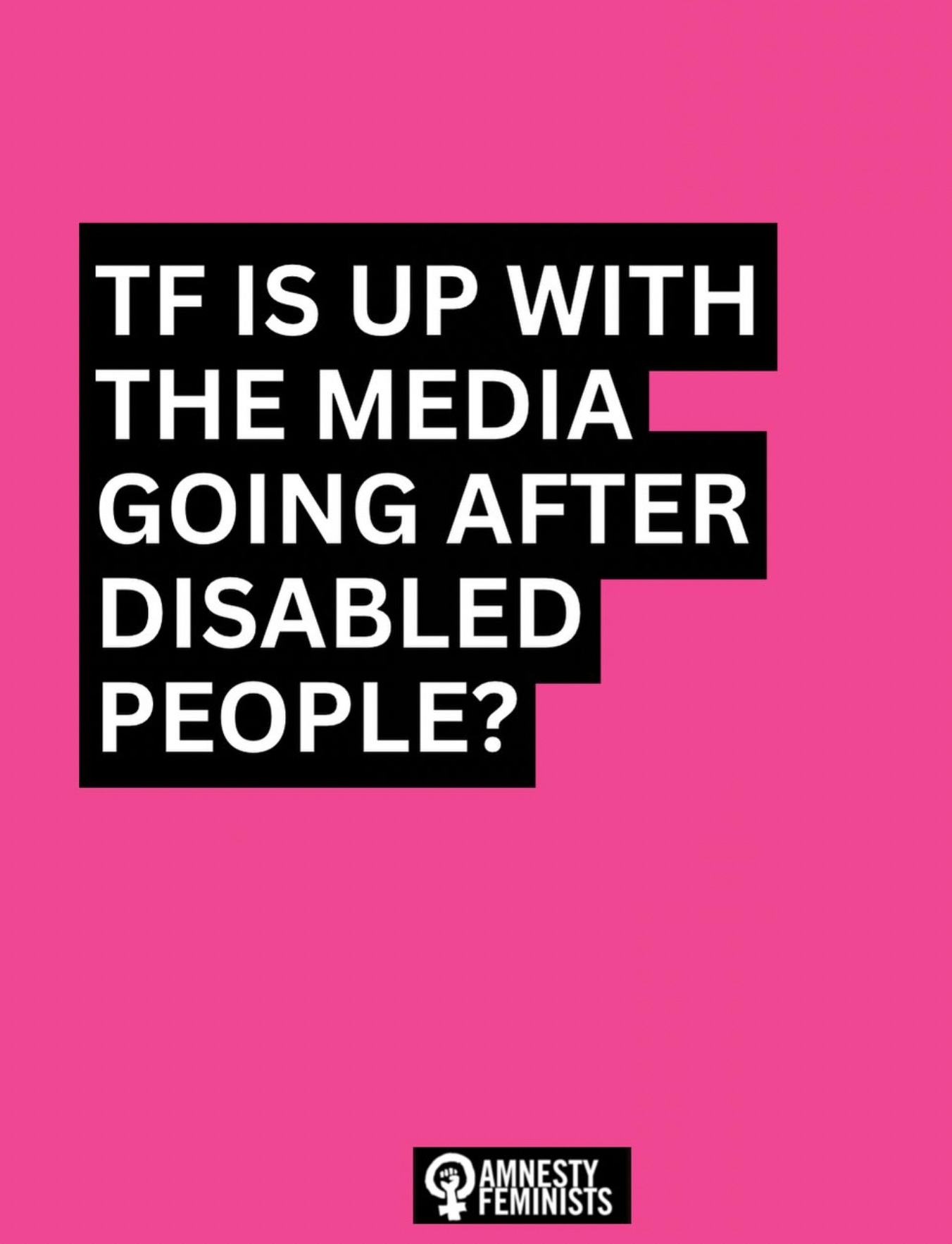
Rather than share too many more of my own thoughts, because truly I can’t speak accurately to this experience beyond my own experience as a young-ish woman with invisible illness, I’m going to share a roundup of incredible responses you can read all over the internet. Erin, my co-editor, does live with POTS and hEDS among other conditions, and she did most of the rounding up here.
Keely Cat-Wells, founder of Making Space - a hub for disabled and chronically ill job seekers, also published a great piece on the same topic, but with a much different, better perspective. I’d recommend reading that one instead and listening to the voices of the creators below.
 Tiktok failed to load.
Enable 3rd party cookies or use another browser
 Tiktok failed to load.
Enable 3rd party cookies or use another browser
 Tiktok failed to load.
Enable 3rd party cookies or use another browser
 Tiktok failed to load.
Enable 3rd party cookies or use another browser
 Tiktok failed to load.
Enable 3rd party cookies or use another browser
 Tiktok failed to load.
Enable 3rd party cookies or use another browser
 Tiktok failed to load.
Enable 3rd party cookies or use another browser
 Tiktok failed to load.
Enable 3rd party cookies or use another browser
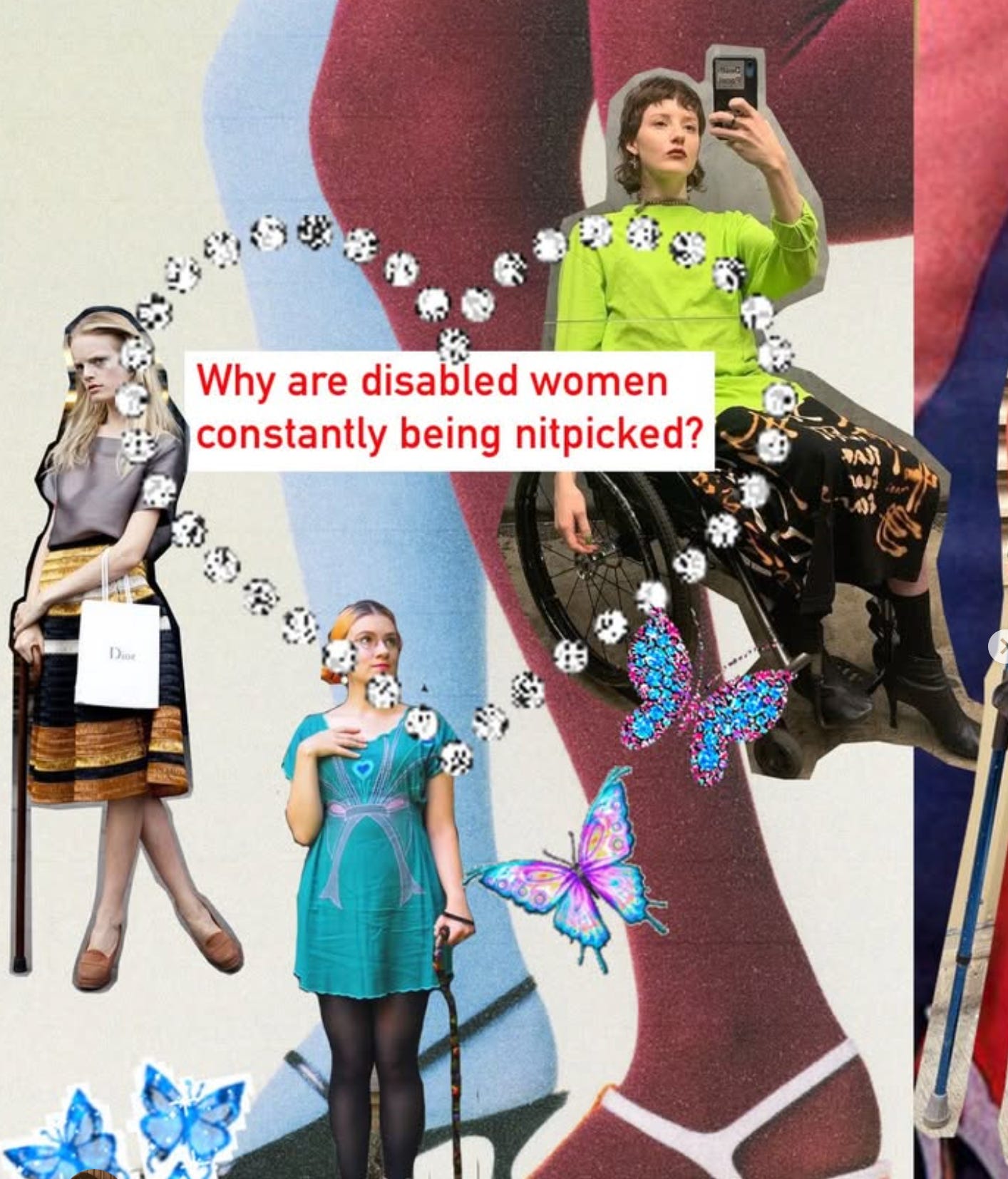
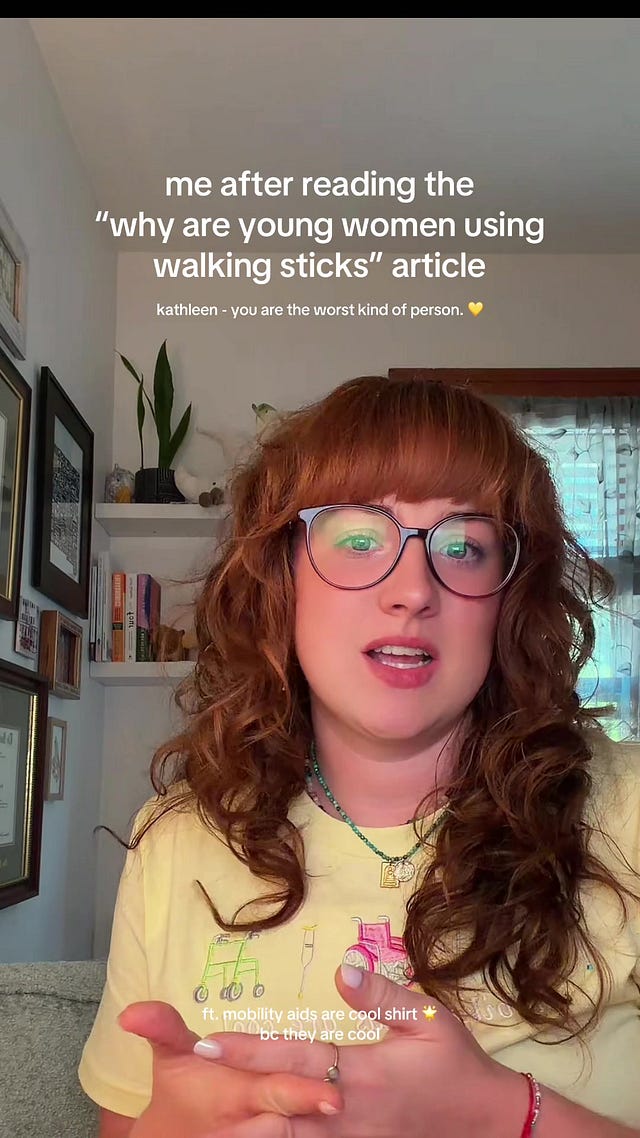 Tiktok failed to load.
Enable 3rd party cookies or use another browser
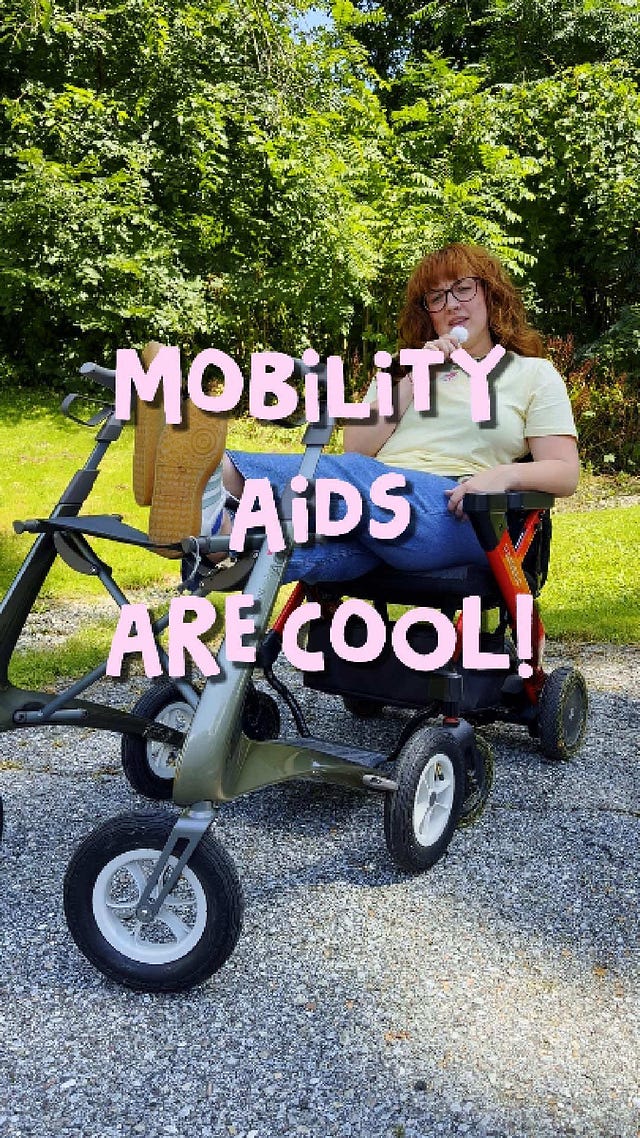 Tiktok failed to load.
Enable 3rd party cookies or use another browser
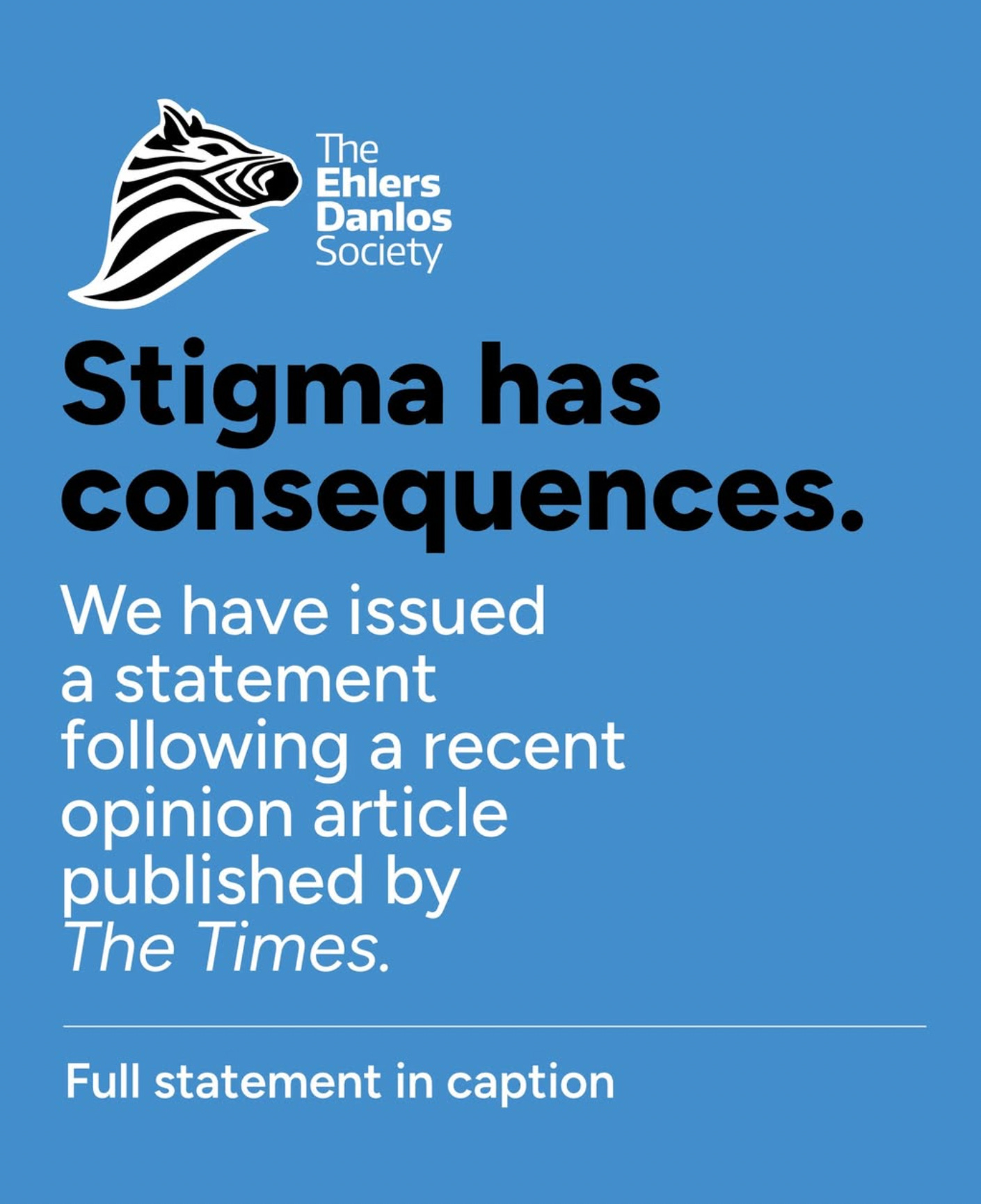
Drop more links in the comments that we may have missed!!
I considered writing a post about it, but wrote a strongly worded email to the times instead. I know it probably won’t change anything, but it was cathartic at the very least. I’m so glad all these creators were on it, thank you for this awesome roundup!